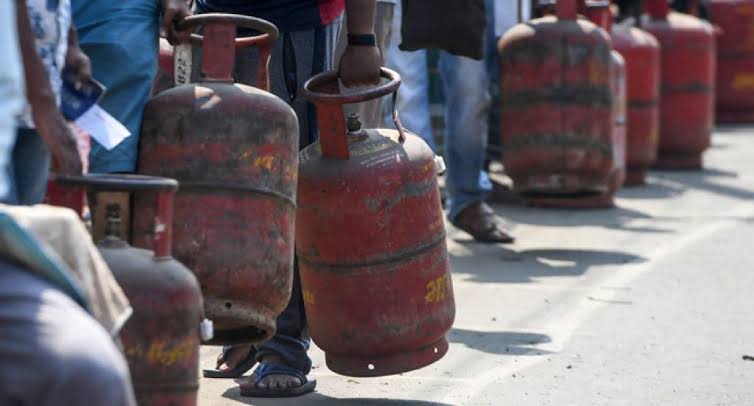
Residents across Lagos State are reeling under the impact of a fresh wave of cooking gas scarcity which has led to a sharp increase in the price of Liquefied Petroleum Gas (LPG) across several communities.
A market survey over the weekend revealed that the price of cooking gas has surged to between ₦1800,₦2,000 ,₦2,200 and ₦2,500 per kilogram, depending on location and vendor.
This translates to about ₦21,000 to ₦26,000 to refill a 12.5kg cylinder and costs many households now described as unbearable.
In areas such as Ikeja, Ikorodu, Surulere, Ikotun and Mushin long queues were observed at gas stations, while several refilling plants remained shut due to low supply.
Many residents lamented that even where gas was available, the cost had doubled within a few weeks.
Mrs Nimat Abdulghafar, a resident of Ikotun,Governors road said she was forced to buy 2500 per Kg after visiting multiple outlets.
“We’ve been having difficulties getting gas in the past few days,on Friday the gas was ₦1,100 at the plant but there was a long queue from 8 am till 4 pm I was unable to get there . On Sunday I was able to get ₦2,500 per KG. I couldn’t buy much because the fee is too much I had to resort to charcoal because of my kids so they can eat at school,” she said.
Another resident in Post-Office Mushin,Mrs Abosede Agunbiade lamented she’s resulted to buying charcoal to cook as she was unable to get gas in her community.
” The queue is too long and the price is to much for me to buy , I had to buy charcoal to cook . This is too much on us ,” she added.
At Fort-San Global Resources Ltd Gas Plant, Ikorodu, it was observed there was no gas sales till further notice.
Consumer groups and civil society organizations are calling for urgent government action to prevent further hardship.
They emphasize the need for policy consistency, reduction of levies, and transparent pricing to protect consumers and encourage more sustainable energy access.