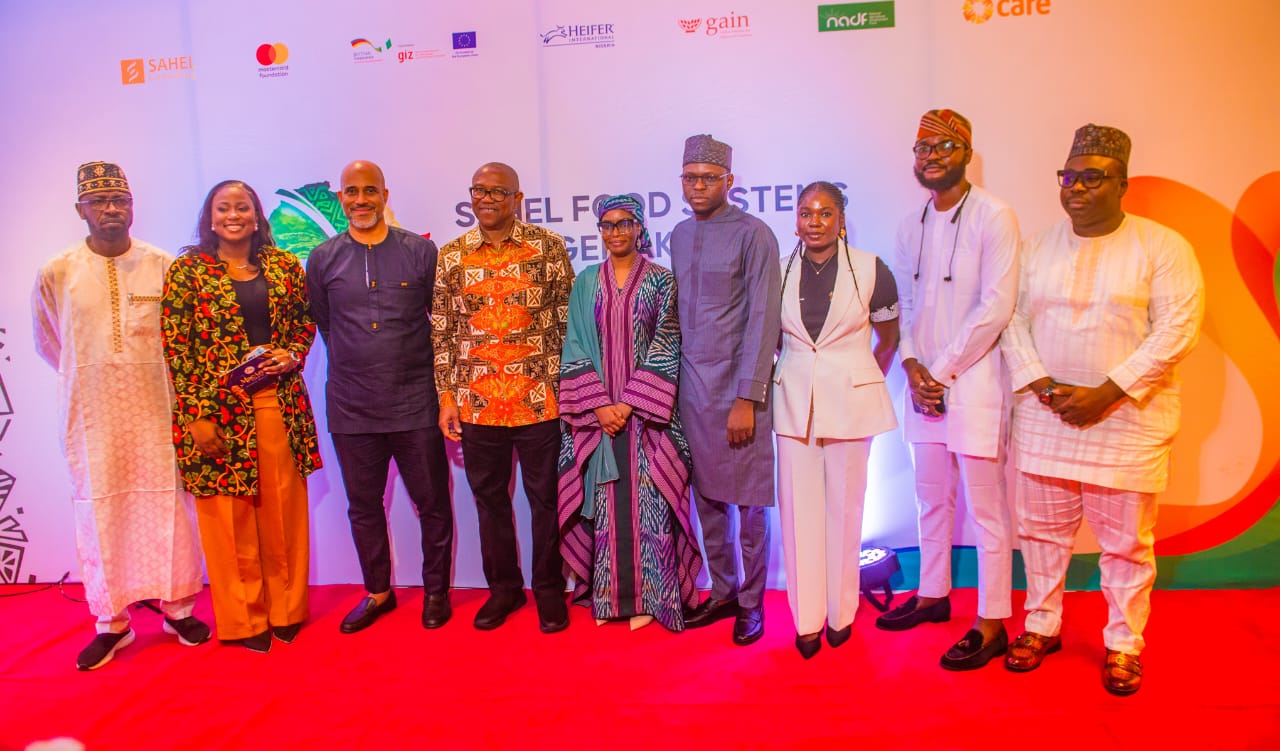
Sahel Consulting Agriculture & Nutrition Ltd. in partnership with the Mastercard Foundation, Heifer International, and GIZ hosted the 2025 changemakers conference.
The event which brought together policymakers, business leaders, farmers, and development partners from across Africa aims to help change makers rethink on how agricultural systems are designed and sustained and well build a shift from short-term intervention projects to a people-centred and sustainable transformation of Africa’s food systems.
The theme : “Designing for Legacy: Building Resilient and Impact-Driven Food Systems”
Minister of Budget and Economic Planning, Sen. Abubakar Bagudu, emphasised that food systems transformation must remain central to national development planning.
“Building resilient and impact-driven food systems should be hardwired to any economic plan,” he said.
“It is a demonstration that the food system moved from primitive practices to modern, innovative and creative systems.”
The Minister of Agriculture and Food Security, Abubakar Kyari, represented by Director and Head of the Ministry’s Nutrition and Food Safety Department, Nuhu Kilishi outlined the need to strengthen agricultural value chains, reduce post-harvest losses, and prioritise the inclusion of women, youth and marginalised farmers in the growth process.
Co-founder of Sahel Consulting,Mezuo Nwuneli, underscored the urgency of preparing Africa’s food systems for the continent’s rapid population
growth.
“Over 500 million people will be added to Africa’s population over the next 10 years, and these individuals need to be fed,” he said.
“We’re either going to do it with homegrown food or with imports. We need to boost yields, improve efficiencies, and enable farmers to grow more. Most importantly, we need homegrown solutions, not copy-and-paste models from elsewhere.”
Managing Partner at Sahel Consulting, Temi Adegoroye called for agricultural programmes that are built to last.
“It’s about building systems that begin with people and shifting from short-term fixes to long-term transformation. True impact isn’t about how much we spend, but about programmes that continue to create change long after funding has stopped.”
Designing for legacy means embedding sustainability right from the start,” she said.
Another Co-founder of Sahel Consulting, Ndidi Nwuneli spoke about leadership, accountability, and local sourcing as a tool for sustainable development.
“Sourcing locally builds our farmers, strengthens the value chain and delivers healthier food. The shorter the value chain, the better the result for our people.”
“Legacy is enduring impact. It is influence. It is what a leader leaves behind, and it applies to all of us,” she said.
She urged participants to embrace local sourcing as a strategic choice that benefits both people and the planet.