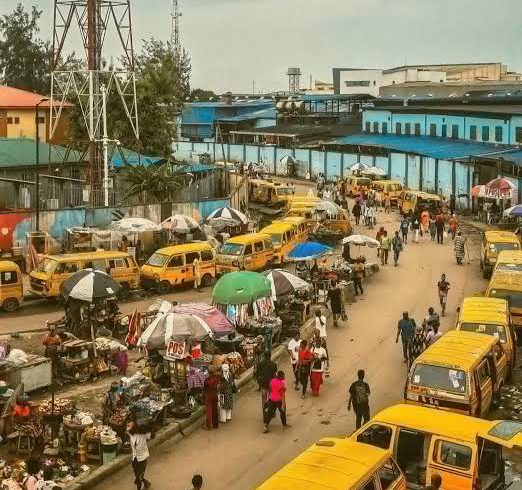
For decades, the National Union of Road Transport Workers (NURTW) has been far more than a transport union. In Lagos State, where millions rely daily on commercial buses, taxis and motorcycles for mobility, the union has evolved into one of the most influential grassroots organisations in the country. Its officials oversee transport operations across hundreds of parks and garages, interact with thousands of drivers and transport operators, and maintain an extensive presence in virtually every local government area.
This vast network has also made the union an attractive political force.
Successive election cycles have seen transport union leaders emerge as key players in political mobilisation, campaign logistics and grassroots engagement. Their influence often extends beyond transport administration into community leadership and local politics, making them sought-after allies by political actors.
However, that influence has come with significant risks. Over the last two decades, several prominent transport union leaders in Lagos have been killed in incidents connected to election campaigns, political rallies, factional disputes or attacks that occurred within politically charged environments. Although each case has its own circumstances and investigations have not established a single cause linking them, the recurring pattern has continued to raise concerns over the increasingly dangerous intersection of transport unionism and politics.
The latest tragedy is the death of Toba Ajiboye, popularly known as Toba Ijaya, the Organising Secretary of the Lagos State Council of the NURTW. His death has once again reignited public debate over the security of transport union leaders and the persistent violence that has accompanied political activities in parts of Lagos.
Ajiboye was reportedly ambushed by unidentified gunmen on Sunday July 12, 2026, while travelling in his vehicle. Witnesses said the attackers riddled the vehicle with bullets before fleeing the scene. He survived the initial attack and was rushed to hospital, where doctors battled to save his life. Despite medical efforts, he later succumbed to his injuries, leaving colleagues, political associates and members of the transport community in mourning on Tuesday July 14,2026.
His killing is the latest chapter in a history that stretches back nearly two decades.
One of the earliest high-profile cases was the assassination of Alhaji Saka Saula, the former Lagos State Chairman of the NURTW. Saula, regarded as one of the union’s most influential leaders during his time, was assassinated on January 6, 2008. His death occurred only a few months after the 2007 general elections and shortly after his release from detention in Abuja. The incident shocked both political observers and transport workers, highlighting the growing vulnerability of influential union figures.
Several years later, tragedy struck again.
On April 9, 2015, Olayemi Matthew Eniola, popularly known as Esi Oluwo or Baba Esi, was killed during a political clash at a campaign rally in Oshodi. The violence that erupted during the event reflected the heightened political tensions surrounding elections and underscored how transport union officials had become deeply intertwined with grassroots political structures.
Barely two years later, another widely known transport leader lost his life.
Rasaq Bello, better known as “Hamburger,” was shot dead on May 29, 2017, during the All Progressives Congress (APC) local government primary elections. Bello was the Chairman of the Motorcycle Owners Association of Lagos State and a respected transport union executive whose influence extended beyond the transport sector into grassroots politics. His killing attracted widespread attention because it occurred during a party primary, illustrating the intense competition that often characterises local political contests.
Political violence again claimed another prominent figure in January 2019.
Ismaila Azeez Ibrahim, widely known as Legacy, was stabbed to death during violent factional clashes at a major governorship campaign flag-off in Ikeja. The incident further reinforced concerns that political gatherings had increasingly become flashpoints for violence involving individuals with strong grassroots influence.
The cycle continued in 2021.
Samuel Kayode, popularly called Ekpo Kinkin and then Vice-Chairman of the Lagos State NURTW, was shot dead on July 8, 2021, during an APC political rally in the Agboju/Oriade axis of Lagos as campaigns for local government elections intensified. His death again demonstrated the risks associated with political mobilisation at the community level.
Taken individually, each of these incidents has its own background, and authorities have not concluded that they stemmed from a common motive. Nevertheless, together they paint a troubling picture of repeated violence involving influential transport union figures over nearly twenty years.
Why NURTW Matters Politically
Political analysts say the prominence of the NURTW in Lagos is not accidental.
With thousands of members spread across motor parks, bus terminals and transport routes, the union possesses one of the largest organised grassroots structures in the state. Its members interact daily with commuters, traders, market associations and residents across urban and rural communities.
Because of this extensive reach, politicians frequently seek the support of transport union leaders during election campaigns. Their ability to mobilise people, coordinate logistics and influence local networks has made them significant stakeholders in grassroots politics.
In many communities, transport union officials are not merely administrators of bus parks. They often serve as community leaders, mediators in local disputes and influential voices whose opinions carry weight among residents.
Political scientists argue that this strategic position inevitably places some union leaders at the centre of intense political competition.
The Cost of Grassroots Influence
Security experts have repeatedly warned that political violence often begins long before Election Day.
Party primaries, campaign rallies, stakeholder meetings and local mobilisation exercises have increasingly become flashpoints where rival interests clash. Individuals who command loyalty, influence or organisational structures sometimes become targets during periods of heightened political tension.
Although law enforcement agencies routinely investigate violent incidents, many of the killings involving transport union figures have continued to generate public concern, with families and colleagues often demanding justice and accountability.
The recurring nature of these tragedies has also prompted questions about the effectiveness of security arrangements during political activities and the need for stronger conflict-management mechanisms within grassroots political structures.
Calls for Reform
Following each major incident, civil society organisations, security analysts and community leaders have renewed calls for reforms aimed at reducing political violence.
Experts have advocated improved intelligence gathering, stricter enforcement of laws against political thuggery, enhanced protection for political actors and greater accountability for perpetrators of election-related violence.
Others argue that transport unions should increasingly focus on their statutory responsibilities while maintaining institutional neutrality in partisan political contests, even though such separation remains difficult given their longstanding historical relationship with grassroots politics.
Looking Ahead
The death of Toba Ajiboye has once again brought national attention to a recurring issue that has persisted for almost two decades.
While investigations continue into the circumstances surrounding his killing, his death joins a growing list of transport union leaders whose lives ended violently within politically charged contexts.
For many observers, the pattern serves as a reminder that democracy cannot thrive where political competition repeatedly results in bloodshed. The recurring loss of influential grassroots leaders not only affects their families and colleagues but also weakens public confidence in the democratic process.
As Lagos prepares for future political contests, stakeholders say there is an urgent need to strengthen peace-building efforts, improve security around political activities and ensure that disagreements are resolved through democratic dialogue rather than violence.l
Ultimately, the history of the NURTW’s involvement in politics is one of immense influence, organisational strength and grassroots relevance. Yet it is also a history marked by painful losses. Whether that narrative changes in the years ahead will depend largely on the collective commitment of political leaders, security agencies, transport unions and citizens to reject violence and uphold the principles of peaceful democratic participation.